
On 14 October 2026, Wassily Kandinsky’s Das bunte Leben (1907) sold at Christie’s in London for £31.56 million, including buyer’s premium. Yet its surviving original frame receives no mention in the extensive auction catalogue entry.
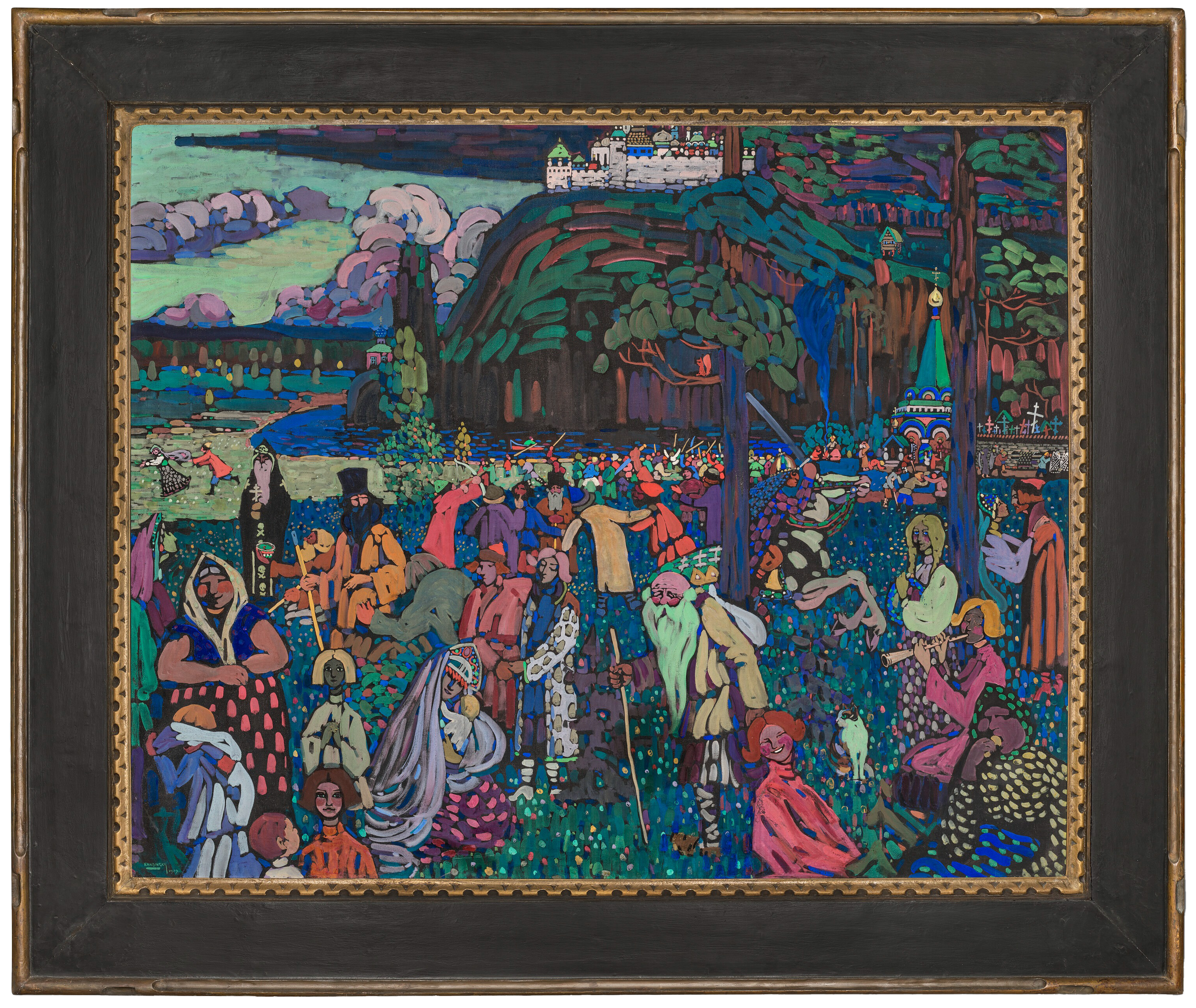
Full view with original frame
The frame, however, deserves a closer look. Its broad, almost black-painted flat panel is bordered on both the inner and outer edges by bronzed mouldings finished with translucent glazes.
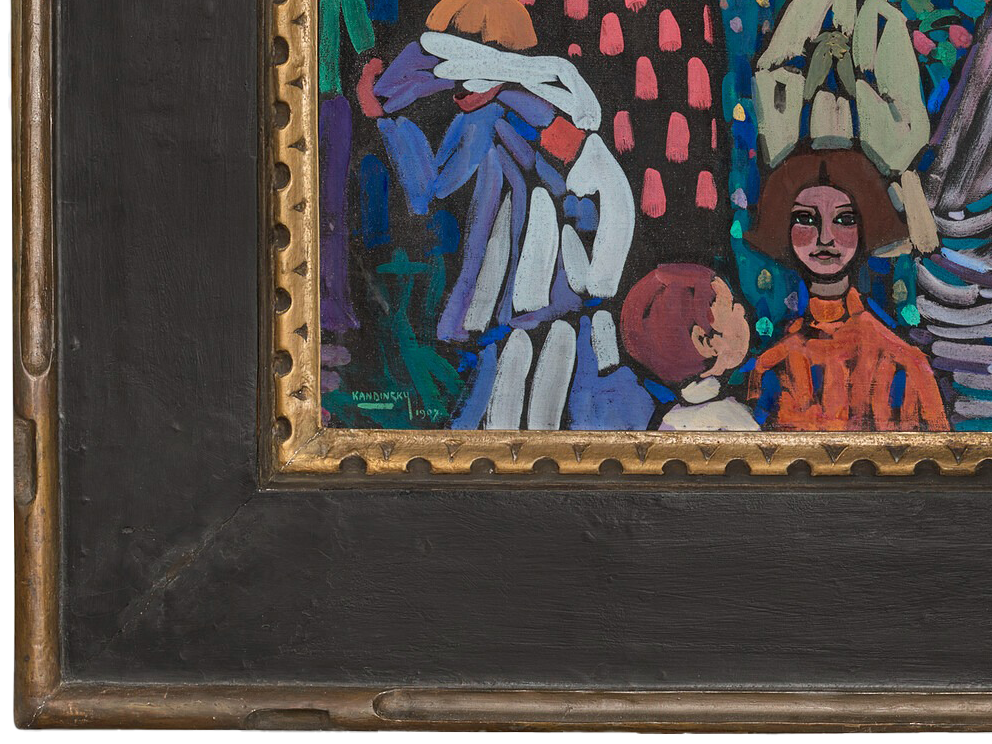
Detail of the lower left corner with signature
Particularly appealing is the lively ornamentation of the two mouldings. The inner sight edge features a sequence of semicircular recesses interspersed with small triangular notches. The outer half-round moulding is articulated by elongated, round-ended grooves.
The design is reminiscent of frames used by Russian artists around 1900, particularly those associated with Symbolism. Kandinsky’s teacher Franz von Stuck, who designed the frames for his own paintings, may also have helped him develop an awareness of the frame’s importance as an integral part of the artwork.
The broad, dark panel of the frame provides a calm counterpoint to the painting’s extraordinary colours and intricate composition. At the same time, the lively ornamentation of the mouldings echoes the playful character of the work itself.
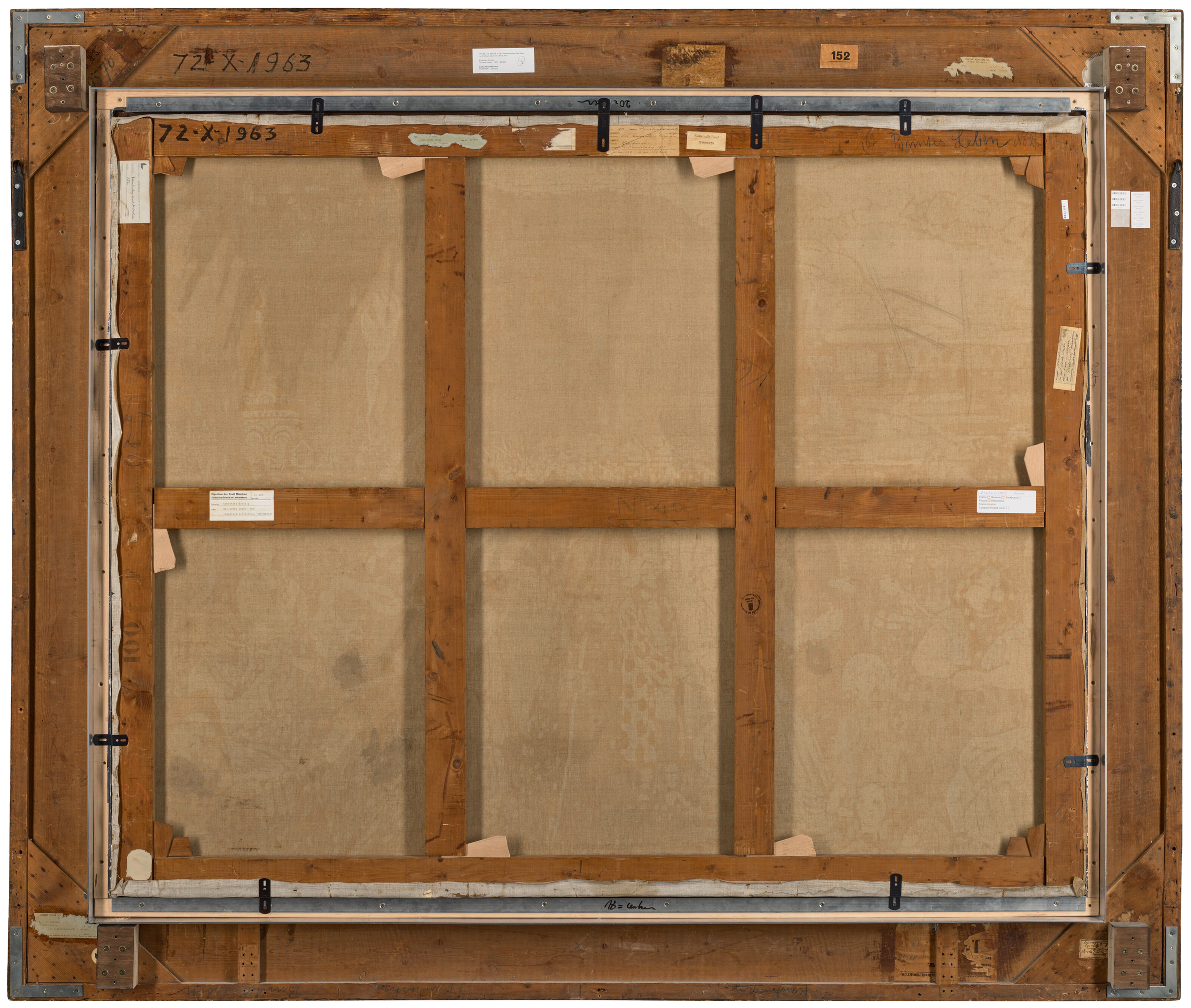
Reverse
The reverse is equally revealing: the frame corners are reinforced with inset wooden triangles. The microclimate frame added later can be seen in Fig. 11 of Ulrike Fischer’s article on the Lenbachhaus website.
Image credits
© Christie’s Images Ltd. 2026 (full view, detail and reverse)