
After visiting the two major Franz West exhibitions in Vienna, I was particularly keen to see his studio. I was especially interested in the famous studio kitchen, an inside-out reconstruction of which West presented at the 2011 Venice Biennale under the title Extroversion 8 (2000–2011). Heiri Häfliger’s work zwei Blatt (2007) was also exhibited there. I discovered it in the studio and subsequently featured it on Instagram. This led to a warm and stimulating exchange with the artist.
The frame plays an essential role in Heiri Häfliger’s artistic practice. It is not merely a boundary but becomes part of the image itself or develops into an independent sculptural form.
I am therefore delighted to present some of his works here in Frame Notes, focusing on the frame as a central element. Heiri Häfliger has written a text especially for this contribution, explaining his working methods and the development of his works.
spins & framings
A text by Heiri Häfliger
Starting from the idea of transforming papier-mâché into a two-dimensional, flat form – into an image – frames also emerged during the working process, almost as by-products alongside the intended flat works. These were subsequently reshaped and became the starting point for the series spins & framings.
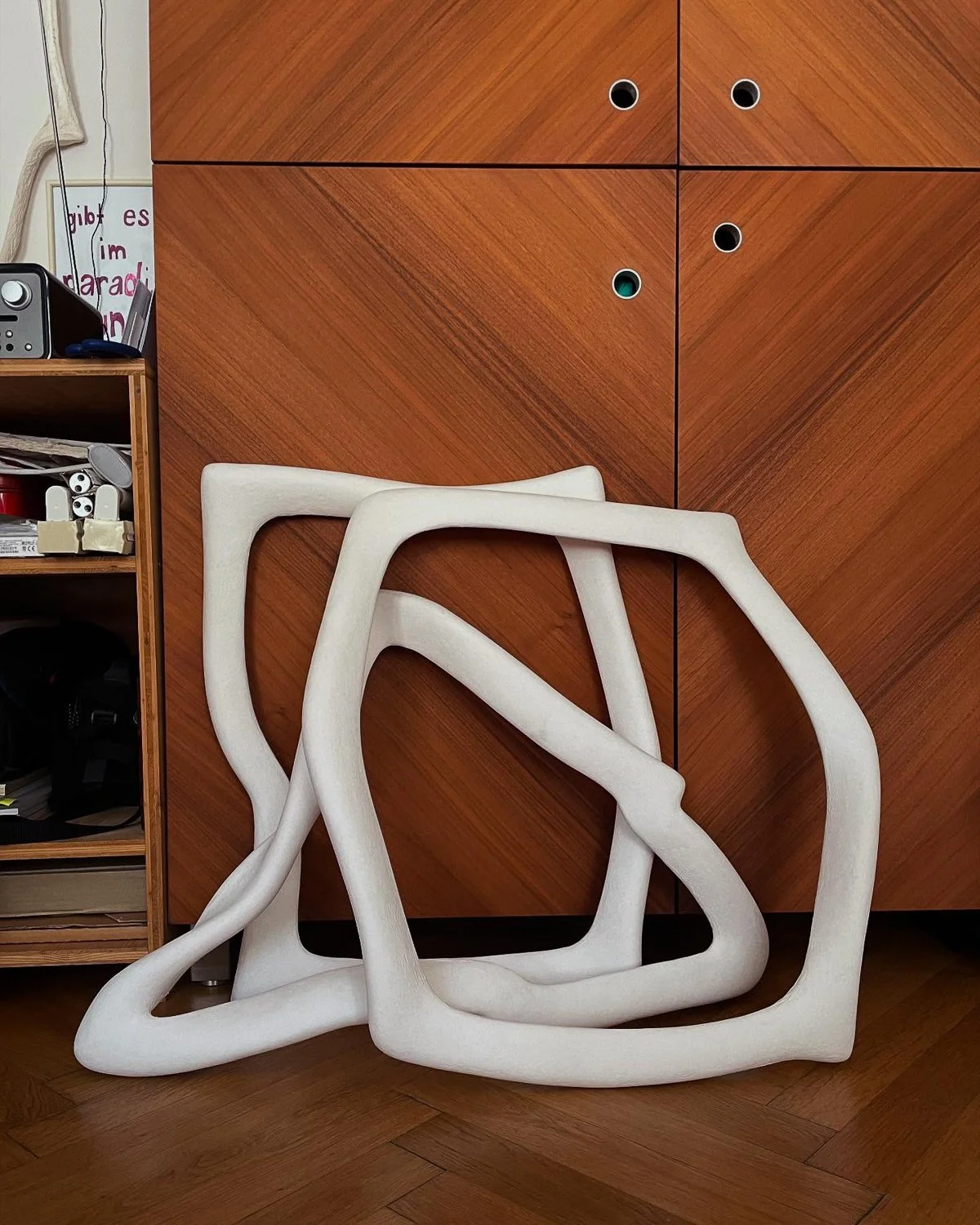
Studio view, 2025
The two wall works Kiss me Kate (2018) and Risikomatrix (2021) illustrate different approaches. Kiss me Kate features a piece of patterned toilet paper mounted onto the surface as its motif. Risikomatrix, by contrast, is a composition of seven rectangular strips of cardboard painted with ink.
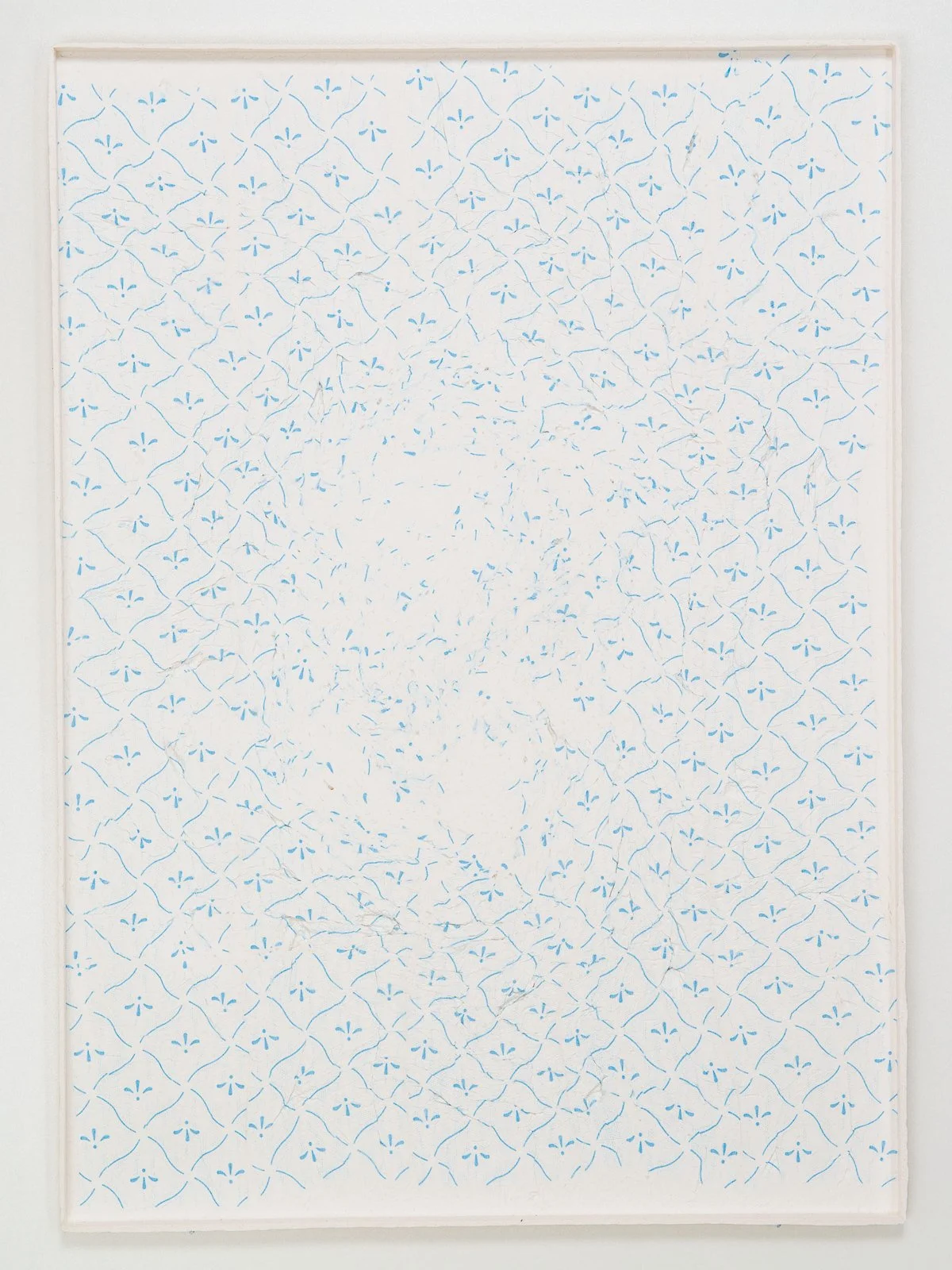
Kiss me Kate, 2018, 1 of 8, papier-mâché, 71 × 51 cm
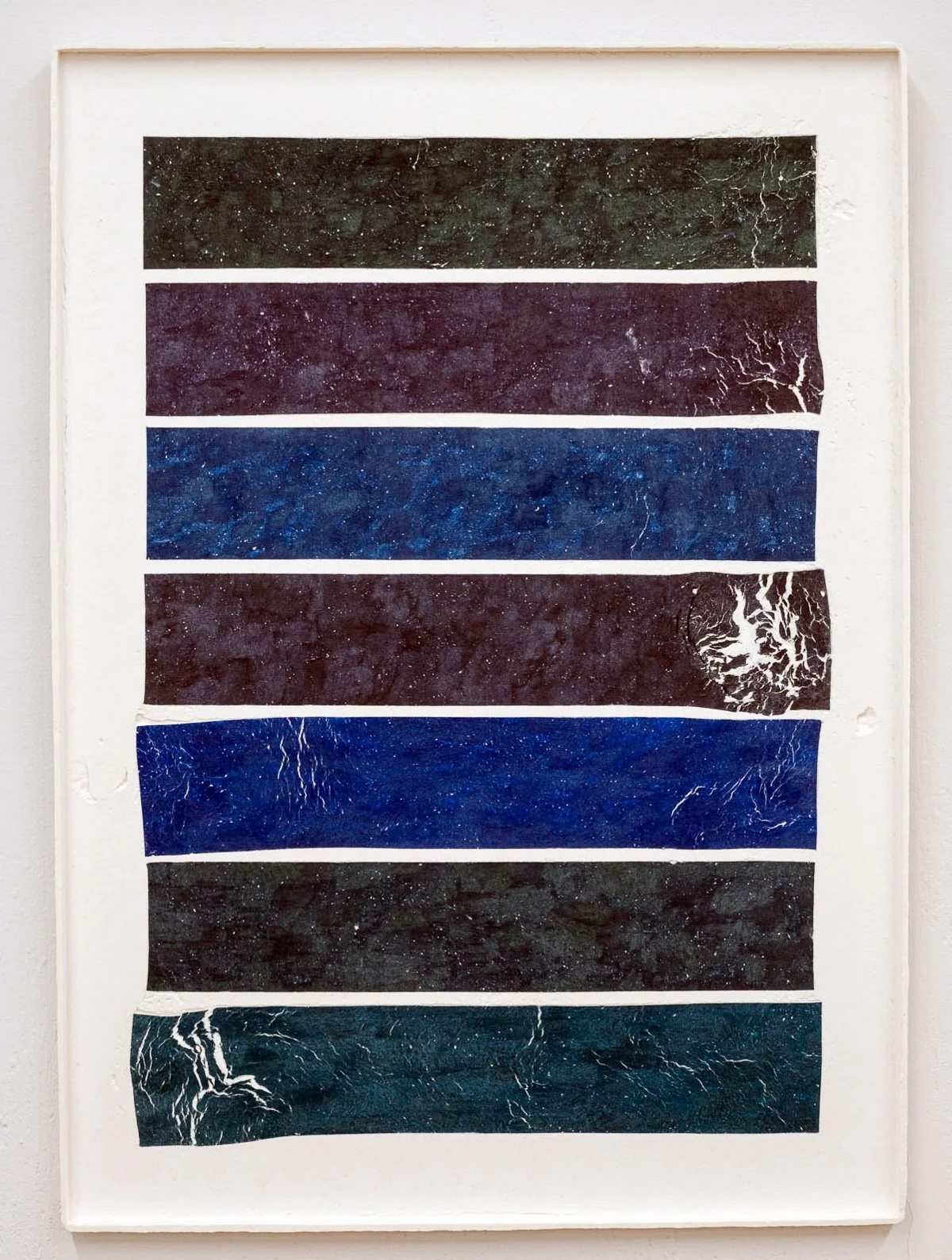
Risikomatrix, 2021, 1 of 4, papier-mâché, ink, 71 × 51 cm
The production process follows a method of working from front to back. First, the motif is arranged in reverse on a water-repellent surface in the desired format. The actual support is then built up from behind using papier-mâché. Under the influence of moisture and movement within the material, the previously positioned motif begins to shift and change out of sight – a process that cannot be observed directly. Only after drying, when the work is detached and trimmed, do these changes become visible. Distortions, shifts and overlaps produce a new pictorial result. At the same time, the shaped edges of the paper remain as a frame.
Another variation on this relationship between image and frame can be seen in zwei Blatt (2007). Two purple sheets of toilet paper are placed on acrylic glass. Papier-mâché is then applied from behind and brought down over the edge of the acrylic glass. After drying and turning the work over, a configuration emerges in which image and frame are directly interlinked: the motif lies behind the glass, while the frame takes shape from the material itself.
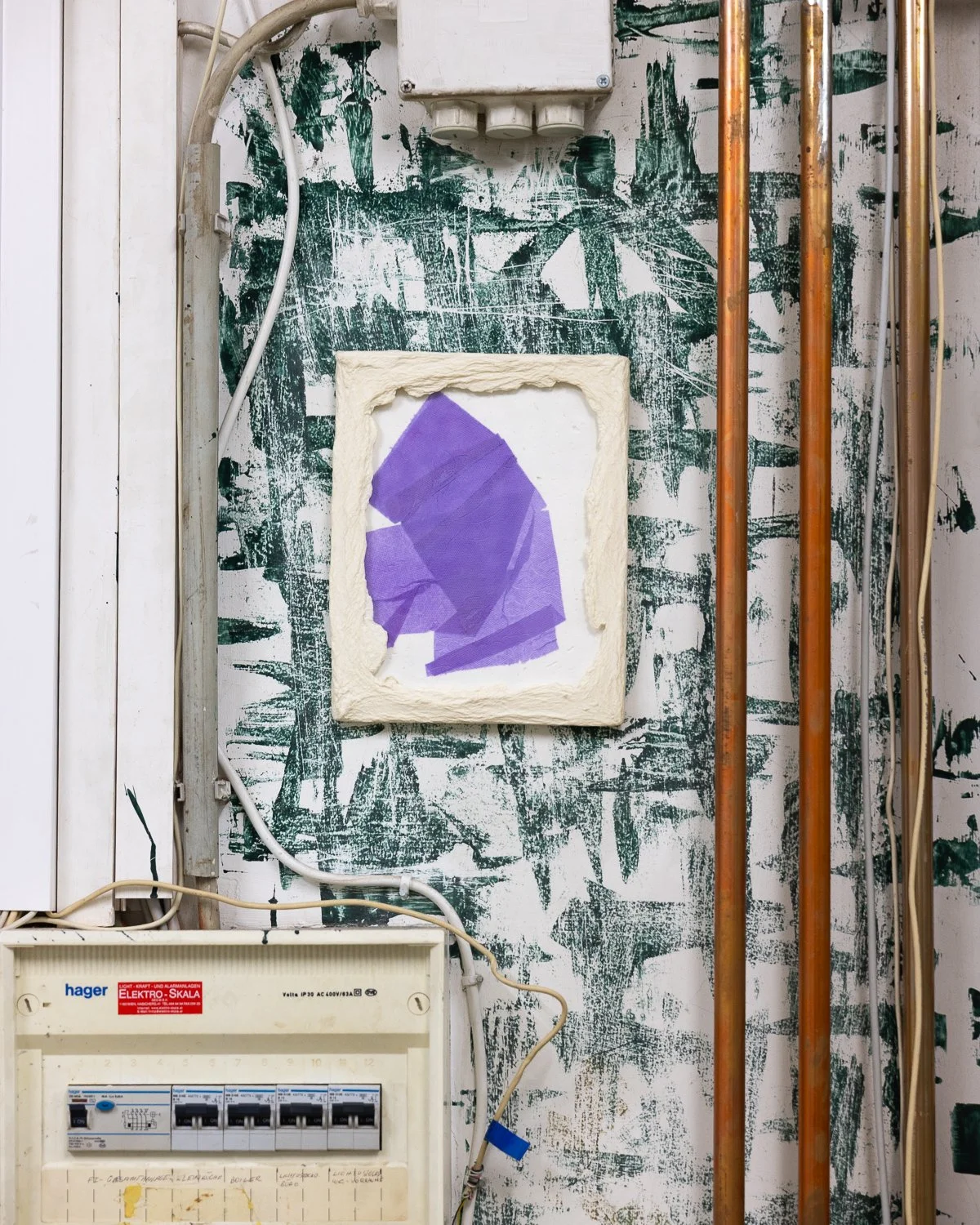
zwei Blatt, 2007, 1 of 24, papier-mâché, Plexi, 26 × 21 cm, in Franz West’s studio. Walldesign: Songül Boyraz and Tamuna Sirbiladze, Untitled, 2000, acrylic paint
The frame sculptures of the spins & framings series, such as am Nagel (2023) and Oliv (2025), take this exploration further. The originally rectangular, flat paper frames are transformed into three-dimensional sculptural forms. Here, too, the initially clearly defined structures are softened, distorted and bent through the application of wet papier-mâché.
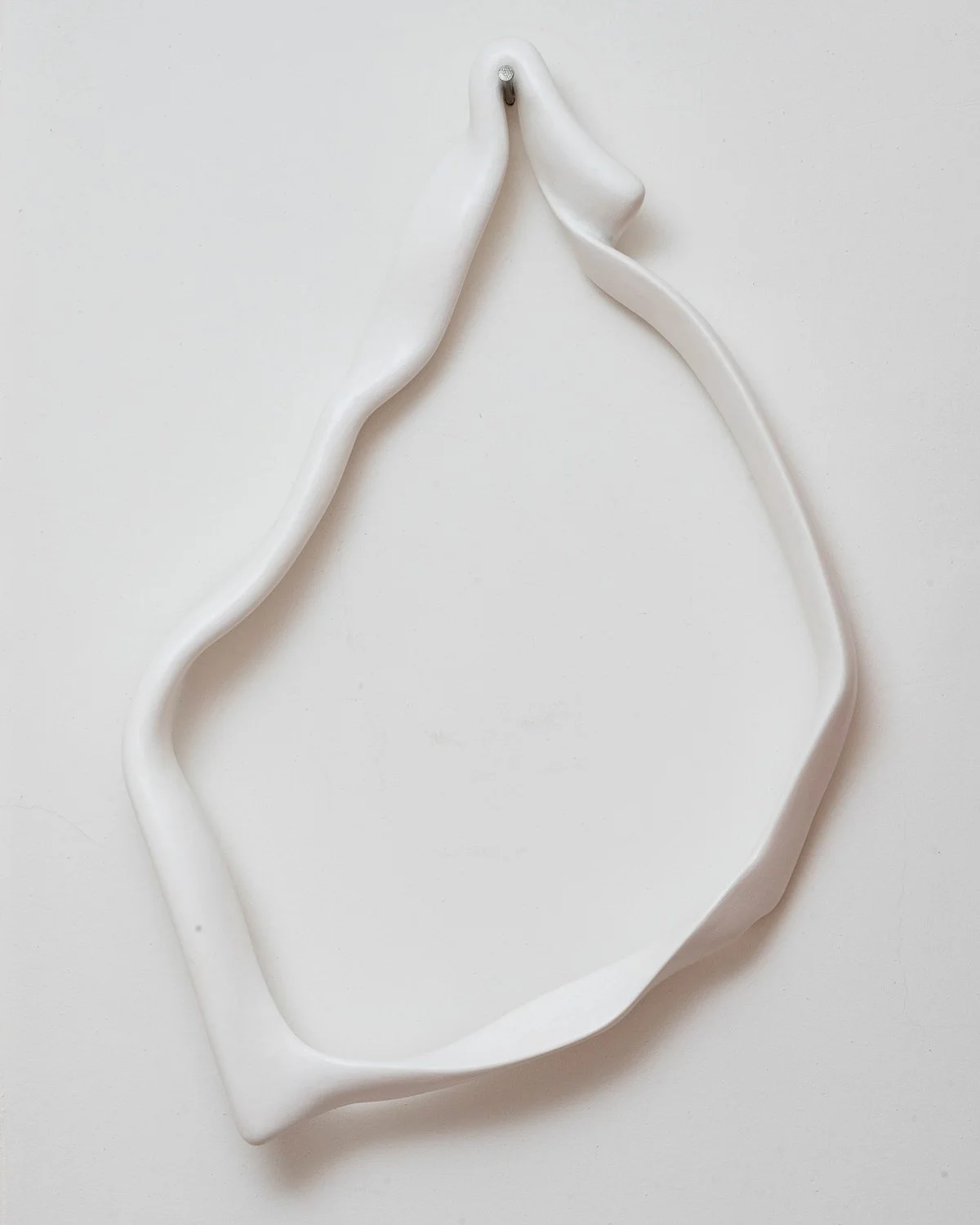
am Nagel, 2023, papier-mâché, nail, clear varnish, 86 × 57 × 9 cm
In an open-ended process of finding form, dynamic curves and lines emerge through the interplay of experimentation, craftsmanship, chance and spontaneity, extending into space and opening up new perspectives. The search for form remains deliberately open. A movement develops that seems to generate itself, carrying an inner impulse outward.
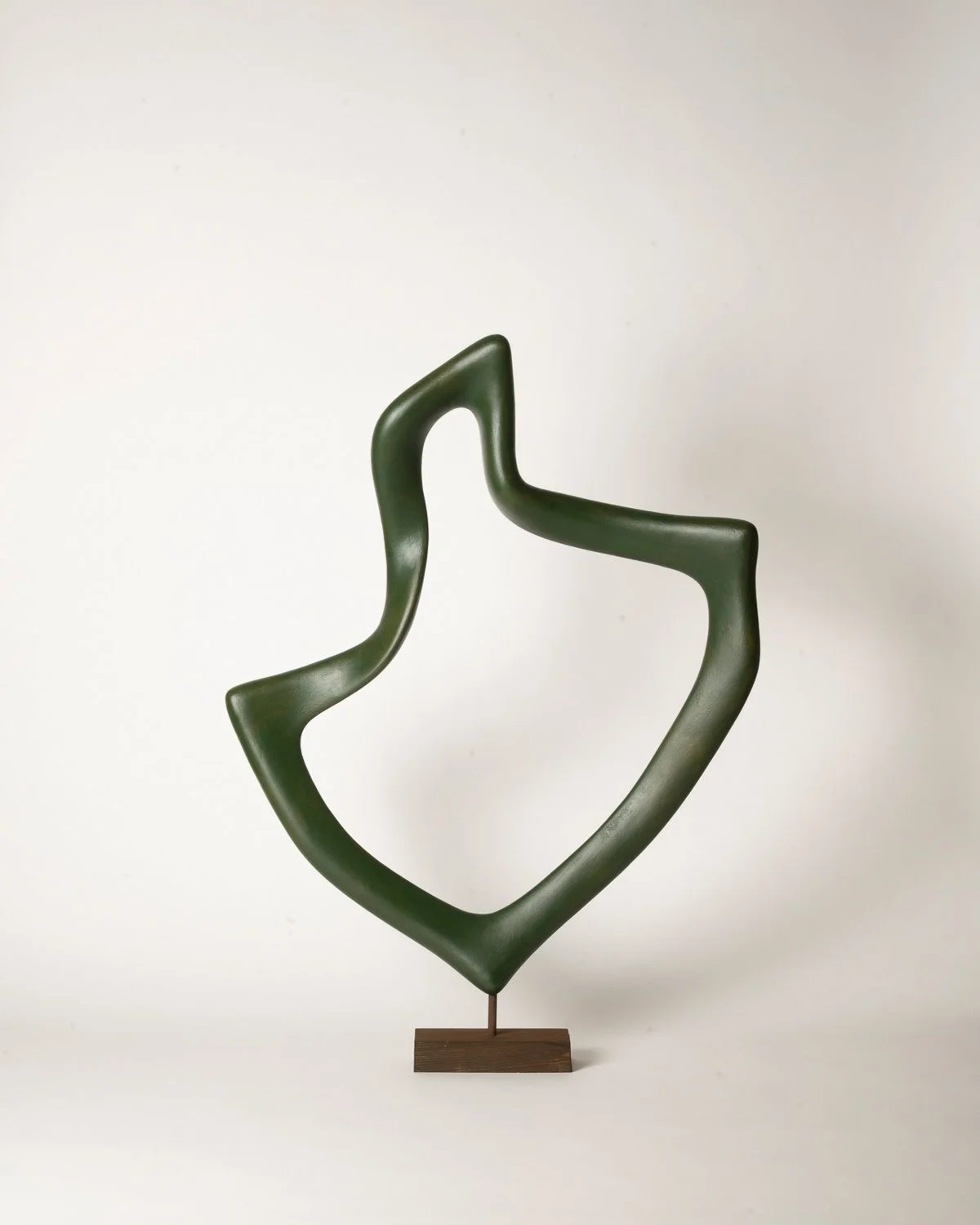
Oliv, 2025, papier-mâché, ink, clear varnish, wood, 62 × 61 × 10 cm
In both a literal and a figurative sense, the frame forms a basic structure within which something takes place and which is influenced by various factors, both internal and external.
In my work, I take up these given structures, work on them and reshape them until the interplay of deliberate intervention and unpredictable chance opens up new possibilities for artistic expression.
Photo credits
Heiri Häfliger (studio view), Lukas Schaller (Kiss me Kate), Ingo Folie (Risikomatrix, am Nagel, Oliv), Werner Murrer (zwei Blatt)